


Views: 0 Author: Site Editor Publish Time: 2026-08-26 Origin: Site
If you have searched for drone sports for schools, STEM classes or youth activities, you have probably seen two names side by side: drone soccer and soccer drone. You may also have come across terms like “kids drone”, “youth drone” or “children’s drone”. Are they the same thing? Why does the sport have two names? And what makes a drone safe enough for a 6-year-old child?
This article breaks down the naming origin, the key differences, and why drone soccer has become the go-to safe drone activity for middle and high school students aged 6–14.
The name drone soccer comes from a very simple idea: it is the sport of soccer, played with drones.
Instead of human players kicking a ball into a goal, pilots fly a specially designed spherical protective drone and try to push it through the opponent’s goal ring. The rules borrow heavily from real soccer — there are strikers, goalkeepers, defenders, a halfway line, offside rules and goal scoring.
Because the core gameplay is essentially “soccer + drones”, the sport was naturally named drone soccer.
The international governing body, FIDA (Federation of International Dronesoccer Association), founded in 2022 and now with 24 member countries, officially writes the name as one word — Dronesoccer — in its rulebooks and tournament materials. This is why you will see “Dronesoccer” on official FIDA posters, referee manuals and World Cup materials.
Soccer drone is not a different sport — it is the same activity, just named from the product side instead of the sport side.
Drone soccer = the name of the sport (like “basketball” or “table tennis”).
Soccer drone = the name of the drone unit itself that is used to play the sport (the spherical protective flying ball).
So when a school or club says “we bought 10 soccer drones”, they are talking about the physical drone hardware. When they say “we run drone soccer classes”, they are talking about the activity or curriculum.
Both terms refer to the same ecosystem. For SEO and marketing purposes, suppliers like Oriental Navigation use both names so that customers searching either way can find the right equipment.
A kids drone (or children’s drone, youth drone) is a broad category. It usually means any small, lightweight, easy-to-fly drone marketed to children. Common examples include mini racing drones, toy quadcopters with LED lights, and beginner camera drones.
A soccer drone is a specific type of kids drone — but purpose-built for team sport, not just casual flying.
Here is the side-by-side comparison:
Feature | Regular Kids Drone | Soccer Drone (Drone Soccer) |
|---|---|---|
Purpose | Casual flying, stunts, racing | Team competitive sport, STEM teaching |
Outer structure | Exposed propellers, thin frame | Full spherical protective cage |
Crash safety | Propellers can break, risk of cuts | Soft cage absorbs impact, no exposed blades |
Gameplay | Solo flying, no standard rules | Standardized 5-a-side team rules (FIDA / FAI) |
Social value | Individual activity | Teamwork, strategy, communication |
Indoor use | Often needs open space, risk of damage | Designed for indoor arenas, safe around people |
Age range | Usually 8+ depending on model | 6–14 with proper Class 20 equipment |
In short: every soccer drone is a kids drone, but not every kids drone is a soccer drone. Soccer drones are the sport-grade, safety-engineered subset of children’s drones.
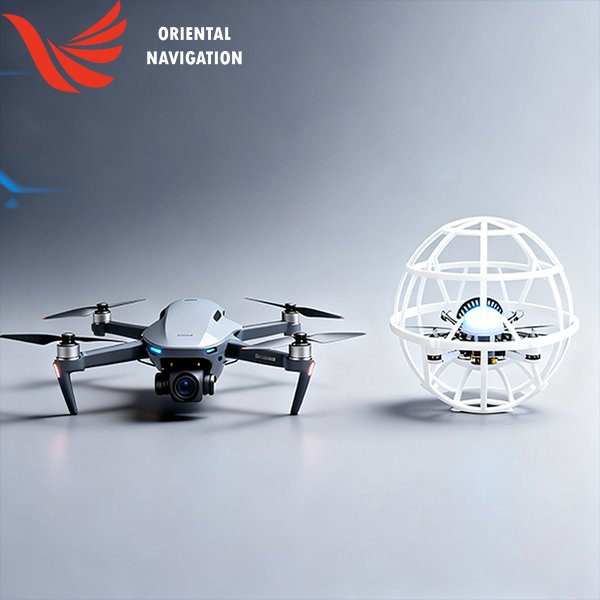
Difference between regular kids drone and soccer drone
When parents and schools ask for a “safe kids drone”, they usually care about four things:
Regular drones have spinning blades that can cut fingers or scratch skin on impact. Soccer drones are fully enclosed in a spherical protective cage — the propellers are completely hidden inside. Even if a child grabs the drone mid-flight, there is no exposed blade to cause injury.
The spherical cage is made of lightweight, flexible material. When two drones collide (which happens constantly in a match), the cage absorbs the impact instead of breaking or bouncing dangerously. This is why drone soccer can be played safely in a small indoor arena with children standing close by.
Entry-level Class 20 soccer drones (20cm diameter, under 110g) are tuned for gentle, predictable flight. They are not built for high-speed racing — they are built for controlled passing, positioning and goal scoring. This makes them far more forgiving for first-time child pilots.
Drone soccer is played inside a netted inflatable arena (Skyfence). The drone cannot fly away, cannot hit spectators, and cannot get lost. This is a huge safety advantage over open-area kids drones, which can drift into walls, ceilings or people.
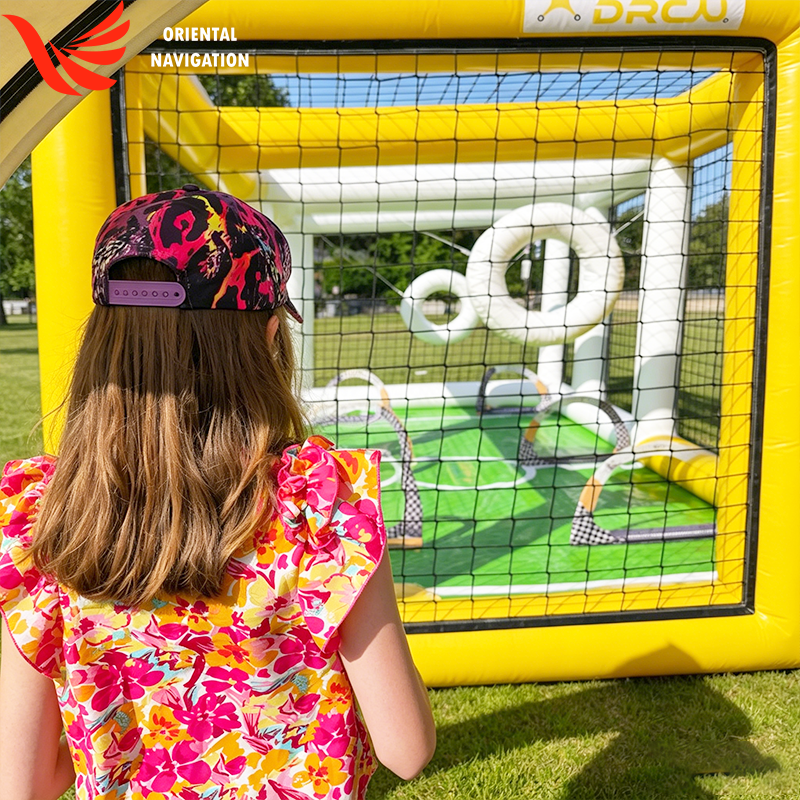
Drone Soccer Arena Creates Fun Outdoor Activities
For schools, after-school programs and youth clubs, drone soccer solves the biggest problem with regular kids drones: they are solo activities with no curriculum, no team structure, and no clear progression path.
Drone soccer gives children:
A real team sport experience — 5 positions per team (Striker, Keeper, Sweeper, Libero, Guide), just like soccer.
Standardized rules — FIDA and FAI both govern official drone soccer, so children can progress from school matches to regional and international tournaments.
STEM learning built in — children learn aerodynamics, spatial reasoning, electronics and coding logic while playing.
Low injury risk — protective cages + indoor arenas = one of the safest drone activities available.
Inclusive participation — no physical strength required. Children of all sizes, genders and athletic abilities can compete on equal terms.
For schools and training centers looking to start a drone soccer program for students aged 6–14, Oriental Navigation’s Drone Class Kit is the classroom-ready all-in-one package.
The kit is designed specifically for structured teaching, not just casual play. It includes everything a teacher needs to run a full drone soccer class: multiple student drones, spare batteries, charging equipment, protective accessories and teaching support materials.
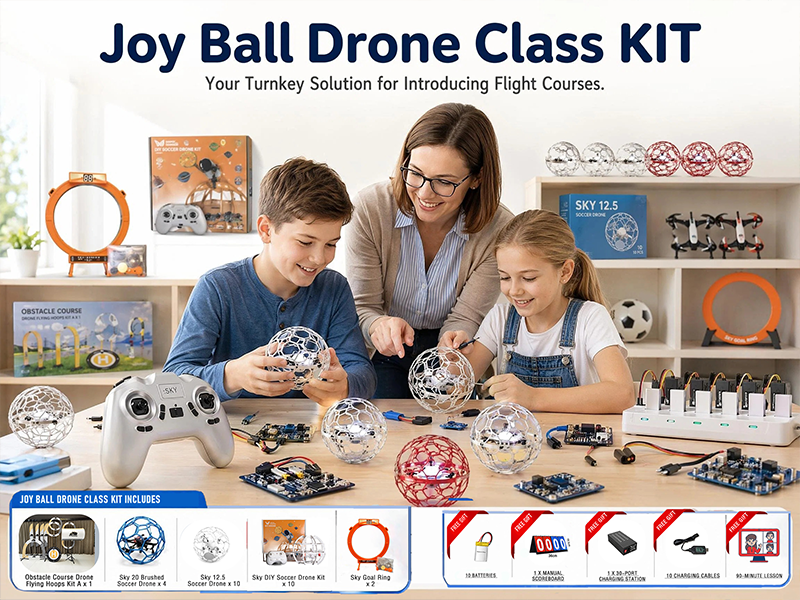
Students aged 6-14 playing drone soccer in classroom with Drone Class Kit by Oriental Navigation
Why schools choose the Drone Class Kit:
✅ Class 20 specification — safe, lightweight and age-appropriate for 6–14 year olds
✅ Full spherical protective cages on every drone — no exposed propellers
✅ Sufficient spare batteries and charging stations for uninterrupted class sessions
✅ Compatible with both FIDA and FAI competition standards
✅ Teaching support and curriculum guidance included
✅ Indoor-friendly — works in classrooms, gymnasiums and activity halls
For larger clubs or commercial venues looking to host tournaments and public events, Oriental Navigation also offers the Sky Arena Center Kit, a full commercial package with multiple inflatable arenas, 100+ drone fleet and ready-to-play game formats.
Drone soccer is the name of the sport — soccer played with drones.
Soccer drone is the name of the drone hardware used to play it.
FIDA officially spells it as one word: Dronesoccer.
A kids drone is any drone for children; a soccer drone is a safety-engineered, sport-specific kids drone with a full protective cage.
Drone soccer is safer for children because of enclosed propellers, soft impact cages, low-speed flight and indoor netted arenas.
For schools, the Drone Class Kit by Oriental Navigation is the most complete classroom solution for students aged 6–14.
Whether you call it drone soccer, soccer drone or Dronesoccer, one thing is clear: it is the safest, most structured and most educationally valuable drone activity for children today.
Contact Oriental Navigation to learn more about the Drone Class Kit and how to launch a drone soccer program at your school or youth center.
